How Are Fiberglass Sand Filters Made? Bilanda FRP Tank Manufacturing Process
Many buyers only compare price when choosing fiberglass sand filters, but manufacturing process and material quality directly determine pressure rating, service life and leak resistance. Poorly made tanks with cheap materials can crack, leak or deform after just a few years, leading to high maintenance costs.Bilanda fiberglass sand filters follow a standardized production process with quality control at every step. Take a look inside our factory to see how our filters are made.
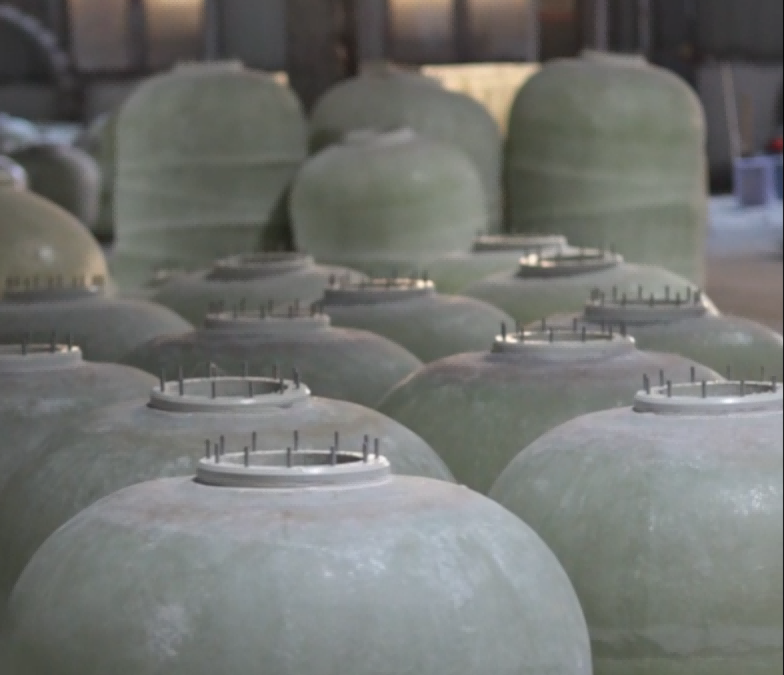
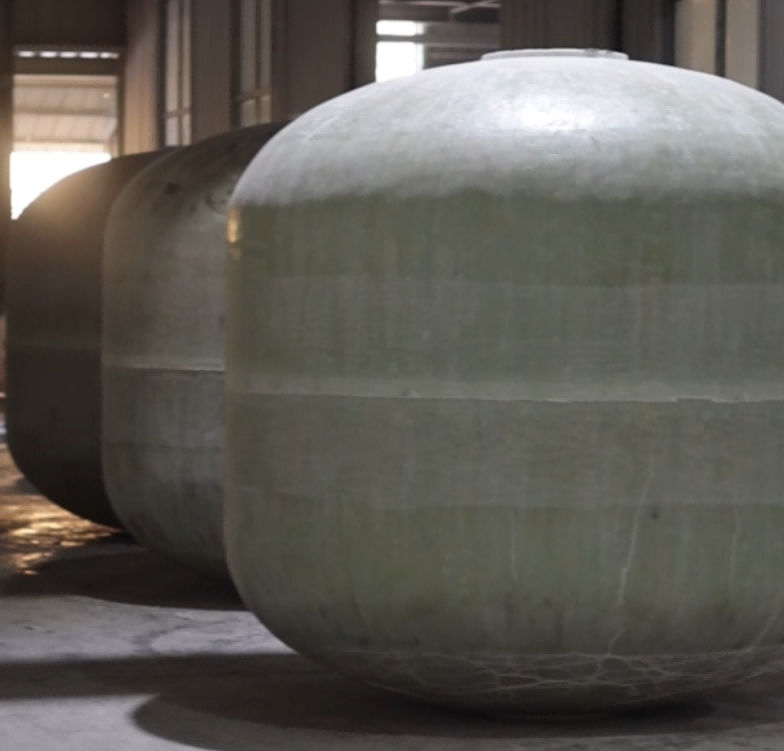
1. One-Piece Liner Molding
The core of every fiberglass filter is the inner waterproof liner. We use corrosion-resistant engineering-grade liner material, molded in one piece with no seams, eliminating leak risks from the start. The smooth inner liner resists scaling and is suitable for pools, hot springs, aquaculture and all water types.
2. High-Strength Filament Winding
After the liner is molded, it goes through the core filament winding process. High-strength glass fiber is wound evenly around the liner with specialized resin, with strictly controlled winding density and wall thickness to meet pressure ratings.The wound tank is UV-resistant, impact-resistant, and will not deform or crack under long-term high-pressure operation.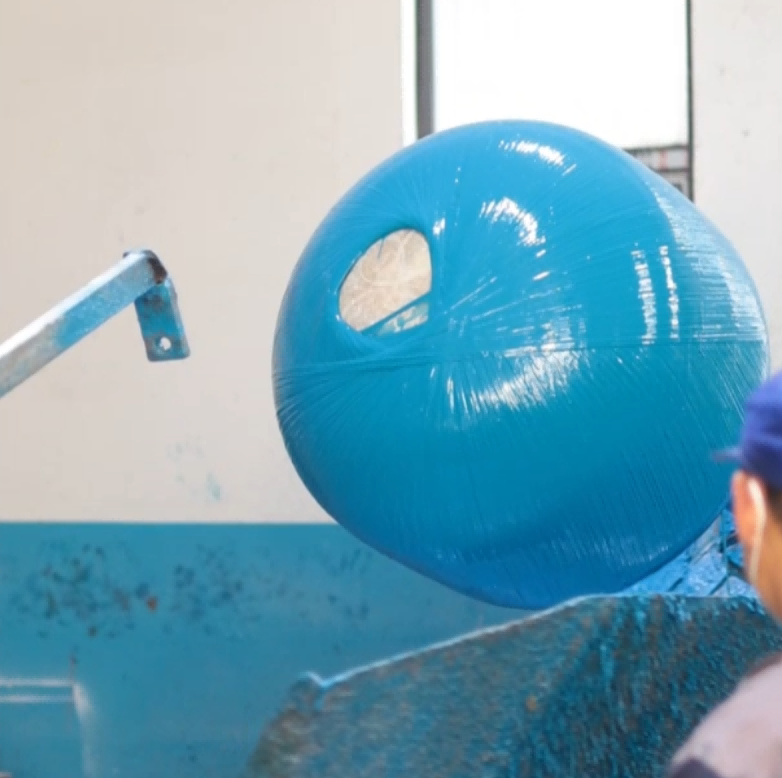
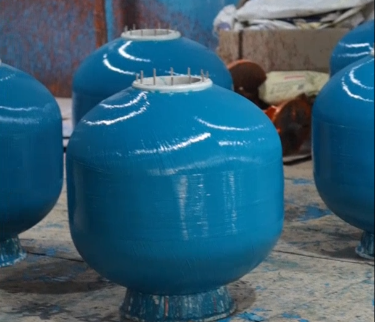
3. Reinforced Base Installation
Each wound tank is fitted with a matched reinforced base. The base is engineered for load bearing, keeping the tank stable during continuous operation, and making transport, installation and maintenance easier.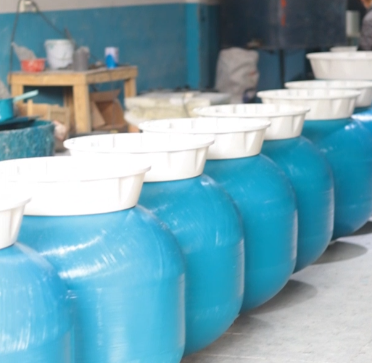
4. Testing & Final Packaging
Every filter is pressure tested before shipping to confirm no leaks and correct pressure rating. Finished units are packed in standard cartons with full protection to prevent damage during transport, ensuring customers receive intact products.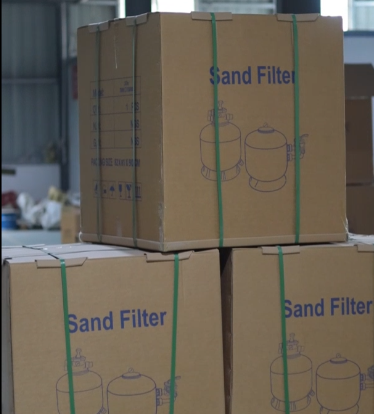
How Our Filters Differ From Standard Models on the Market
Many customers ask why our filters are heavier than same-size competitors – the difference is in materials and construction:
✅ More winding layers, thicker tank wall: Standard filters on the market use only 4 layers of glass fiber winding; we use 7-8 layers, making our tanks 1/3 heavier than same-size competitors. The thicker wall delivers higher pressure capacity, and resists bulging and cracking under long-term high-pressure operation.
✅ Thicker virgin plastic internal parts: All internal distributors, fittings and plastic components are made from 100% virgin (not recycled) plastic, with thicker wall design. Virgin material resists aging and corrosion far better than recycled plastic, and will not become brittle or crack over years of use.
✅ Higher overall pressure rating: More winding layers combined with thicker virgin plastic parts give our filters higher overall pressure capacity, making them ideal for high-head, high-flow commercial systems with stable long-term performance.
✅ One-piece seamless liner for excellent leak resistance;
✅ Reinforced base for stable, wobble-free operation;
✅ 100% pressure tested before shipping for guaranteed quality.
When choosing fiberglass sand filters, manufacturing process and material quality are the key to long service life, not just price. Bilanda supplies a full range of fiberglass sand filters direct from factory, with custom sizes available. Contact us for pricing and samples.